

Action Button: Custom: News Releases
Action Button: Custom: Links
Action Button: Custom: Pictures
Action Button: Custom: Guestbook
Action Button: Custom: Credit
Action Button: Custom: Email
Action Button: Custom: Home

Action Button: Custom: About Rudy Wahl


Nuinsco Resources reports additional drill results from the Prairie Lake Rare Metals Project: http://www.nuinsco.ca/pdf/10202011.pdf

Ruffle Lake & Foxtrap Lake Property

High Rare Earth Potential

Prairie Lake Area 325 Claims Available for Option

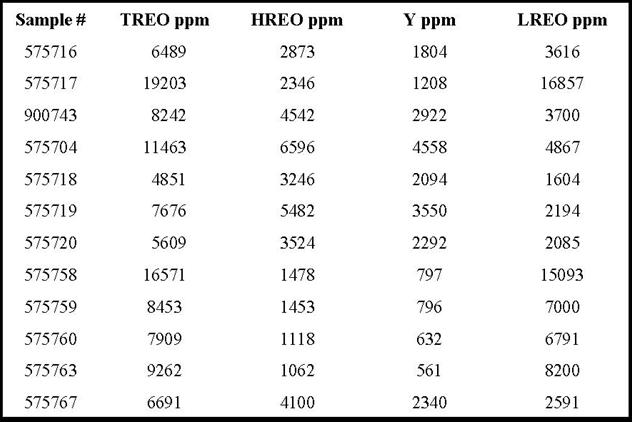
October 2011 see first assay results below

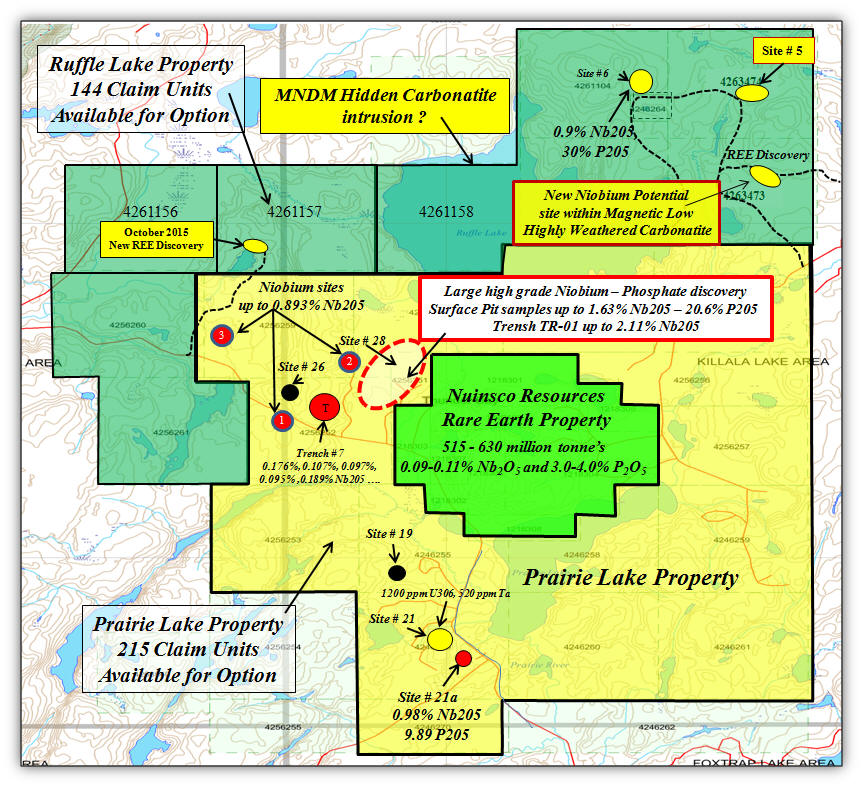
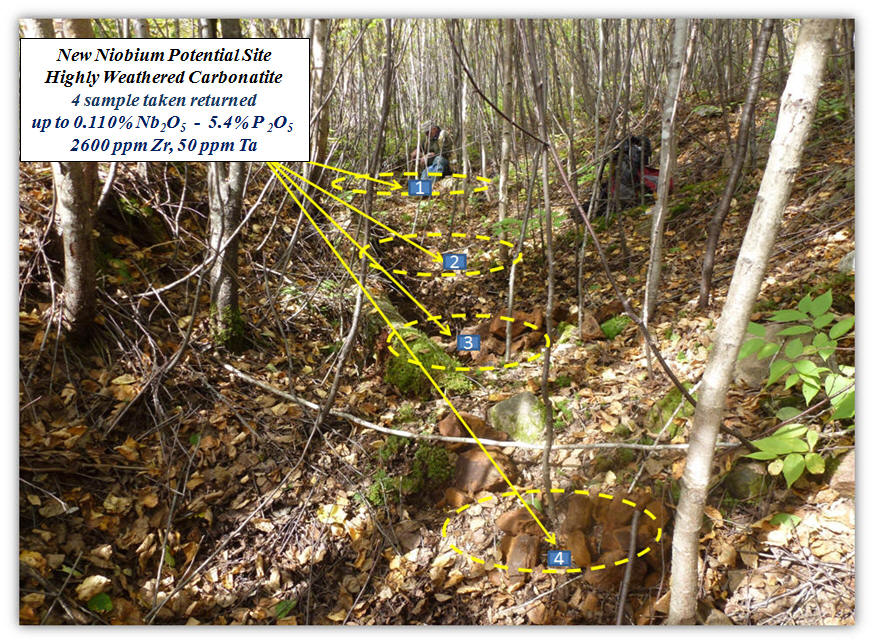
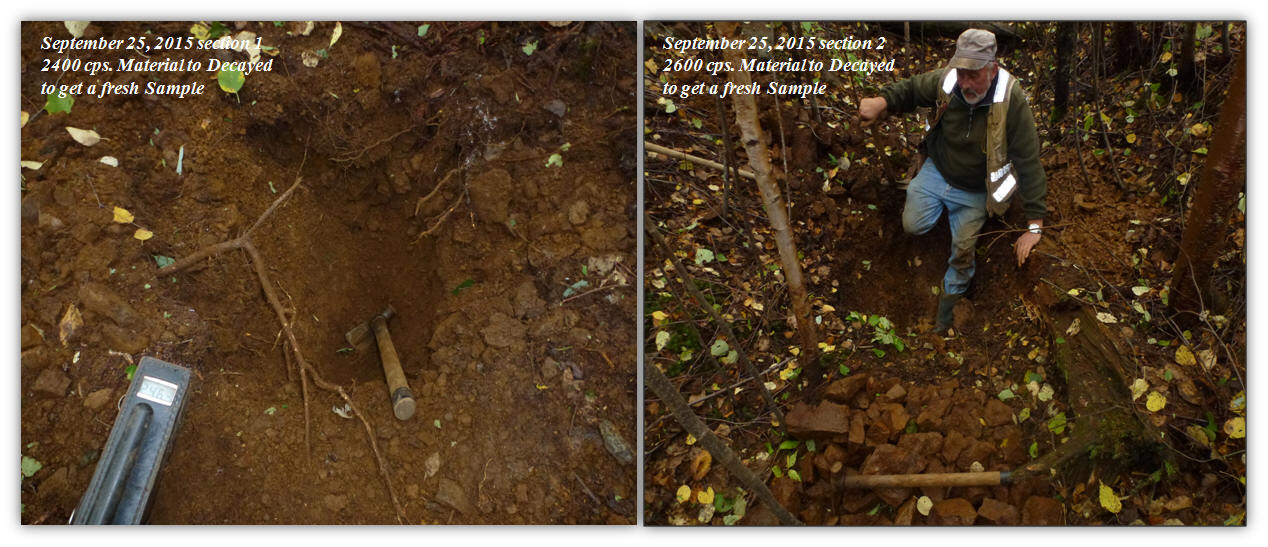
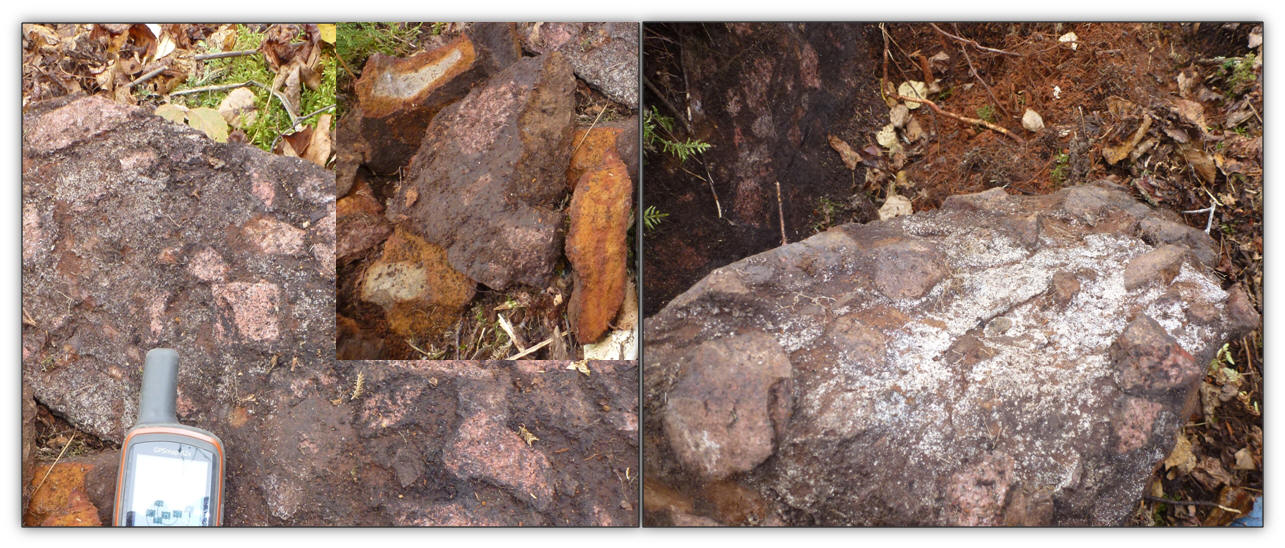
Ruffle Lake Property - New Rare Earth Discovery

Site # 5 is up to 3850 cps, see information below.

Site # 6 is up to 7000cps, see information below.


The surrounding area of Nuinsco Resources Carbonatite section has high potential for economical discoveries. The first assays results from the Lab returned grades up to 1.92% TREO, see first results listed below. Given the current market conditions for rare earths and the urgency to find alternative sources, our newly discovered targets do bear geophysical and geochemical signatures. 

The Ruffle Lake property consist of 144 claims and ties on to Nuinsco Resources Rare Earth property at the Prairie Lake Carbonatite Complex in the northern section.


The Foxtrap Lake / Ruffle Lake claims are south and north adjacent to the Prairie Lake Carbonatite Complex (PLCC). The PLCC lies at the intersection of fractures subsidiary to the northern extension of the Big Bay-Ashburton Fault (BBAF). The BBAF is deep seated, related to the Lake Superior mid continental fault, and is considered to be a controlling structure in the formation of the major alkaline intrusives at Prairie and Killala Lakes and which is adjacent to the Foxtrap Lake and Ruffle Lake property.


The Prairie Lake Carbonatite Complex is a quasi circular structure with an approximate surface area of 10 km2 . The complex has been dated by several investigators at l billion years.
 

Prairie Lake Area Carbonatite Complex:

 
Heavy minerals associated with carbonatite were recovered from several samples. Of particular interest is sample 16-MA-99. This modern alluvium sample yielded a large number and variety of heavy minerals similar to those recovered from the Prairie Lake Cabonatite. In addition, several other heavy mineral types, also found at the Molycorp Pass Carbonatite in northern California, were recovered. The Molycorp Mountain Pass Carbonatite is of particular interest as it is a major supplier of rare earth metals to the world and has been since the early 1950s. Barite, synchysite and bastnaesitite are the 3 important minerals associated with the California deposit which measures only 200-300 feet across.
 
To test whether the mineral signature of the modern alluvium sample were derived from the Prairie Lake Carbonatite, which occurs up ice, 2 bedrock samples were taken close to the sample site. The minerals derived from these bedrock samples confirmed that the modern alluvium mineral signatures were local and similar to that reported from the Molycorp Mountain Pass Carbonatite.


Ruffle Lake and Foxtrap Lake Properties Location and Access:

Ruffle Lake and Foxtrap Lake Property consist of 325 contiguous unpatented mining claims, located approximately 45   kilometers northwest of Marathon and 28 km north of Hwy. 17. The property is readily accessible from Trans-  Canada Highway 17 - Dead Horse Road. The  Dead Horse Road cut the main part of the Property in the northern section and the southern section of the property is accessibly true logging Roads.
 

Ruffle Lake Property:

Ruffle Lake Property consists of 10 unpatented contiguous mining claims ( 144 units, 2,304 hectare ) recorded in good standing in Thunder Bay Mining Division within the Killala Lake Twp. G-0596 .

                                                                                        Claims/units:
                                                       4258071 (16), 4258072(16), 4258073 (16), 4258074 (16), 4258075 (16),

4258079 (16), 4258080 (16), 4261103 (16), 4261104 (15), 4246264 (1)
 
Foxtrap Lake Property:
 
The Foxtrap Lake Property consists of 11 unpatented contiguous mining claims ( 181 units, 2,896 hectare ) recorded in good standing in Thunder Bay Mining Division within the Foxtrap Lake Area Twp. G‑0592
 
Claims/units:
 
        4256263 (16), 4256262 (16), 4258091 (16), 4258092 (16), 4258093 (16), 4258094 (16), 4258095 (16)
4256264 (16), 4258096 (16), 4258097 (16), 4258098 (16), 4261101 (1), 4261102 (1), 4256265 (1), 4258099 (1)


General Geology:

Regional Geologic Setting:

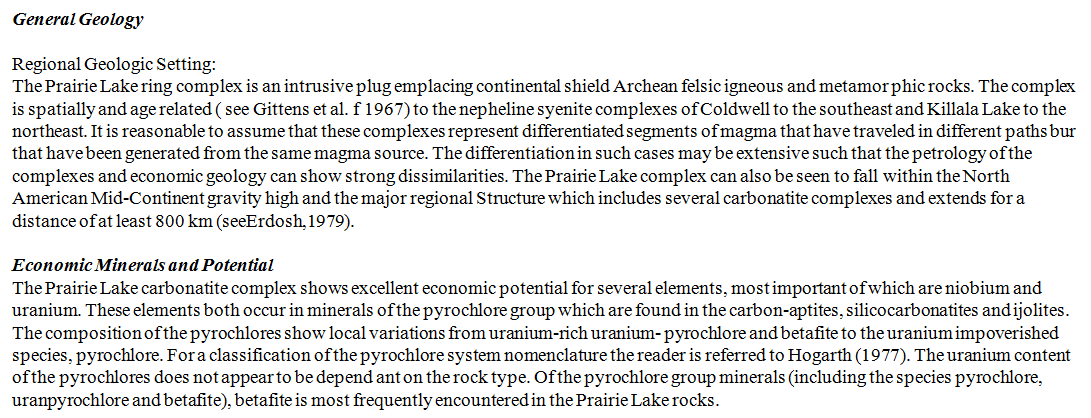
The Prairie Lake ring complex is an intrusive plug emplacing continental shield Archean felsic igneous and metamor phic rocks. The complex is spatially and age related ( see Gittens et al. f 1967) to the nepheline syenite complexes of Coldwell to the southeast and Killala Lake to the northeast. It is reasonable to assume that these complexes represent differentiated segments of magma that have traveled in different paths bur that have been generated from the same magma source. The differentiation in such cases may be extensive such that the petrology of the complexes and economic geology can show strong dissimilarities.

The Prairie Lake complex can also be seen to fall within the North American Mid-Continent gravity high and the major regional Structure which includes several carbonatite complexes and extends for a distance of at least 800 km (seeErdosh,1979).


Economic Minerals and Potential:

The Prairie Lake carbonatite complex shows excellent economic potential for several elements, most important of which are niobium and uranium. These elements both occur in minerals of the pyrochlore group which are found in the carbon-aptites, silicocarbonatites and ijolites. The composition of the pyrochlores show local variations from uranium-rich uranium- pyrochlore and betafite to the uranium impoverished species, pyrochlore. For a classification of the pyrochlore system nomenclature the reader is referred to Hogarth (1977). The uranium content of the pyrochlores does not appear to be depend ant on the rock type. Of the pyrochlore group minerals (including the species pyrochlore, uranpyrochlore and betafite), betafite is most frequently encountered in the Prairie Lake rocks.

Recommendation:

Field work conducted by Rudy Wahl (Prospector) has located multiple new occurrences of alkaline rocks with significant REE values as well as elevated radiometric signatures. Tony Mariano and Son visit the Prairie Lake area property in July 2011 and they recommended to fly a closely spaced airborne radiometric & magnetic survey over the Prairie Lake property, also Tony Mariano recommended that all the magnetic lows under the swamps that surrounding the center carbonatite plug (Nuinsco Resources property) on the Prairie Lake property to be drilled. The area around Nuinsco Resources carbonatite plug has high potential to locate an rare earth deposit. 


Nuinsco Reports Significant Increase in ETMI at Prairie Lake Project

1:48 EDT Wednesday, October 26, 2011

TORONTO, ONTARIO--(Marketwire - Oct. 26, 2011) - Nuinsco Resources Limited ("Nuinsco")(TSX:NWI)(www.nuinsco.ca) today announced that the Updated Exploration Target Mineralization Inventory ("ETMI") at its easily accessible, Prairie Lake rare metals project in northwestern Ontario has been increased to 515–630 million tonnes grading between 0.09-0.11% niobium (0.9 to 1.1 kg/tonne) and 3.0-4.0% phosphorus (1.2 to 1.4 kg/tonne), making it one of the largest deposits of its kind in the world.

"The ETMI increase places Prairie Lake well within the ranks of the ten largest carbonatite-hosted niobium deposits in the world, and in North America it is second only to the Iron Hill Project in Colorado owned by Colorado Rare Earths Inc., in contained tonnes (the average grade at Prairie Lake is however greater)," said Paul Jones, President. "The increase follows from the incorporation into the ETMI of the drill and trench results obtained from the 2010 work program that returned widespread and extensive niobium (Nb2O5) and phosphorus (P2O5) analyses."

The significant size of the ETMI at Prairie Lake, its location near existing infrastructure and transportation networks, the relative ease with which it could be exploited from surface using quarry methods and the continuing potential for expansion of the ETMI, all point to Prairie Lake being an undervalued asset within Nuinsco's property portfolio. In addition to niobium and phosphorus, the suite of minerals of significant economic potential also includes tantalum (Ta), uranium (U3O8) and rare earth elements (REE) (including lanthanum (La), cerium (Ce), samarium (Sm), neodymium (Nd) and yttrium (Y)),


http://www.stockhouse.com/Bullboards/MessageDetail.aspx?p=0&m=30321423&l=0&r=0&s=NWI&t=LIST


October 2011

Ruffle Lake Property -New Rare Earth Discovery

Site # 1 to # 5 is up to 3850 cps.

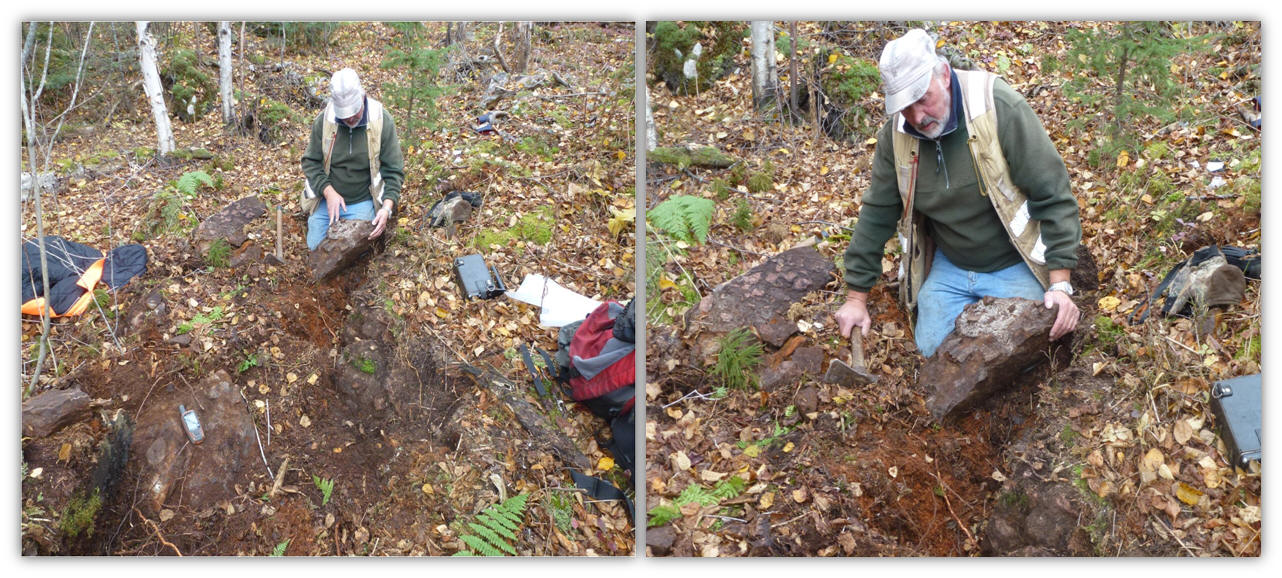
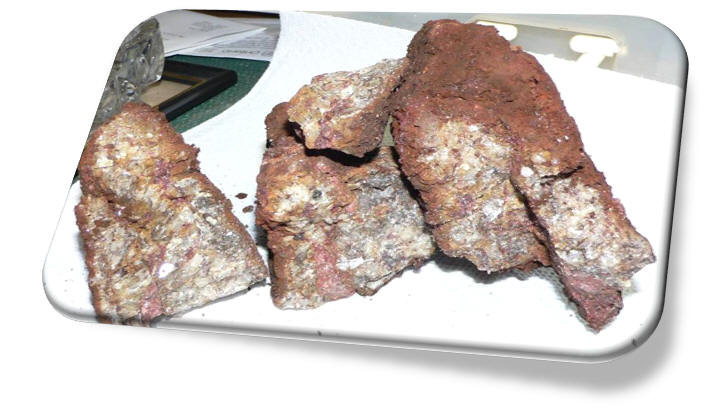
Sample information and sample pictures from the Ruffle Lake Property September 2011

( Click on Picture below to see more information )

October 2011

Ruffle Lake Property -New Rare Earth Discovery

Site # 6 is up to 7000 cps.

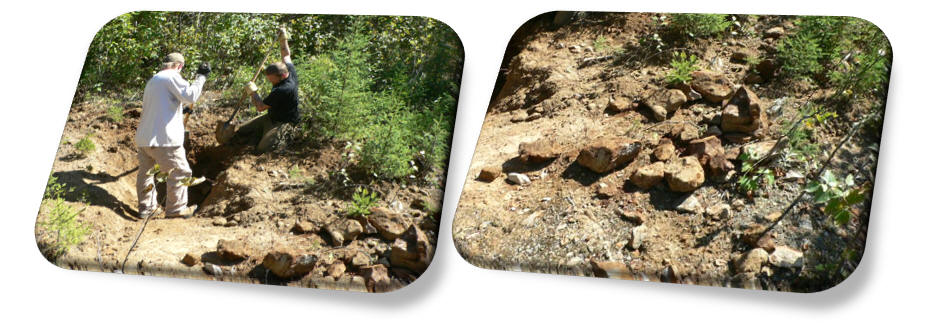
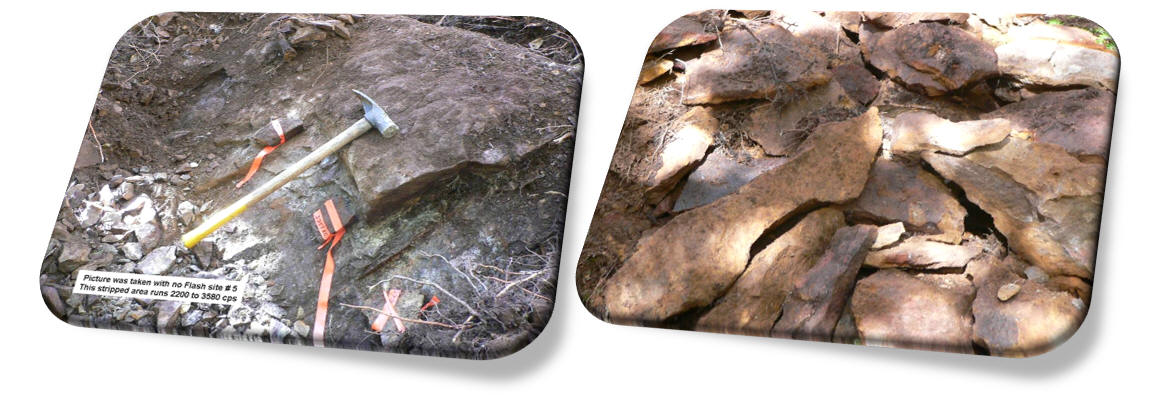
Sample information and sample pictures from the Ruffle Lake Property October 2011

( Click on Picture below to see more information )


Ruffle Lake Property

1,52 % TREO & 2530 ppm Zn Boulder found just south of Ruffle Lake property


Foxtrap Lake Property -New Rare Earth Discovery

Site is up to 3045 cps.

Sample pictures from the Foxtrap Lake Property

( Click on Picture below )

Foxtrap Lake Property Data

Ruffle Lake Property Data


Regional Structural Setting

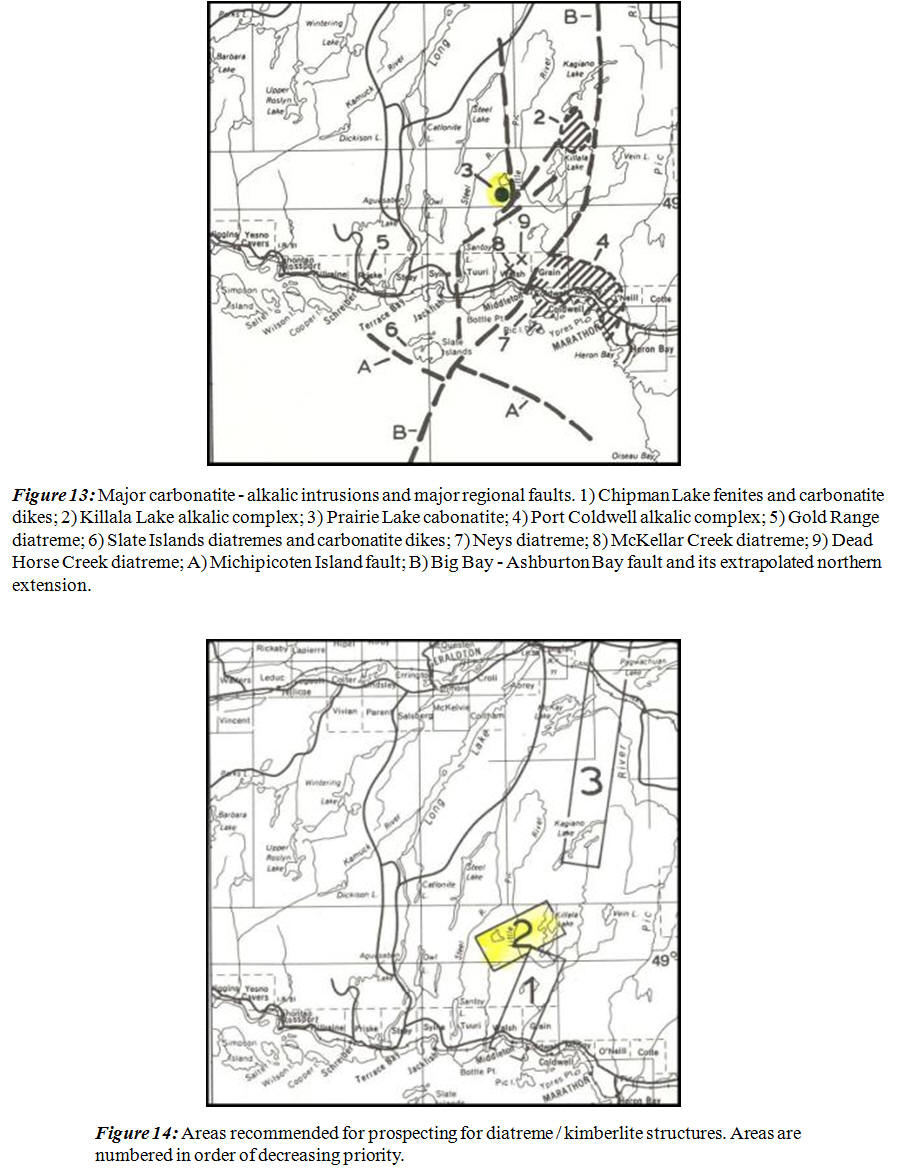
Figure 13: Major carbonatite - alkalic intrusions and major regional faults. 1) Chipman Lake fenites and carbonatite dikes; 2) Killala Lake alkalic complex; 3) Prairie Lake cabonatite; 4) Port Coldwell alkalic complex; 5) Gold Range diatreme; 6) Slate Islands diatremes and carbonatite dikes; 7) Neys diatreme; 8) McKellar Creek diatreme; 9) Dead Horse Creek diatreme; A) Michipicoten Island fault; B) Big Bay - Ashburton Bay fault and its extrapolated northern extension.

 Recommendations for Regional Exploration

Figure 14: Areas recommended for prospecting for diatreme / kimberlite structures. Areas are numbered in order of decreasing priority.